April 29, 2026
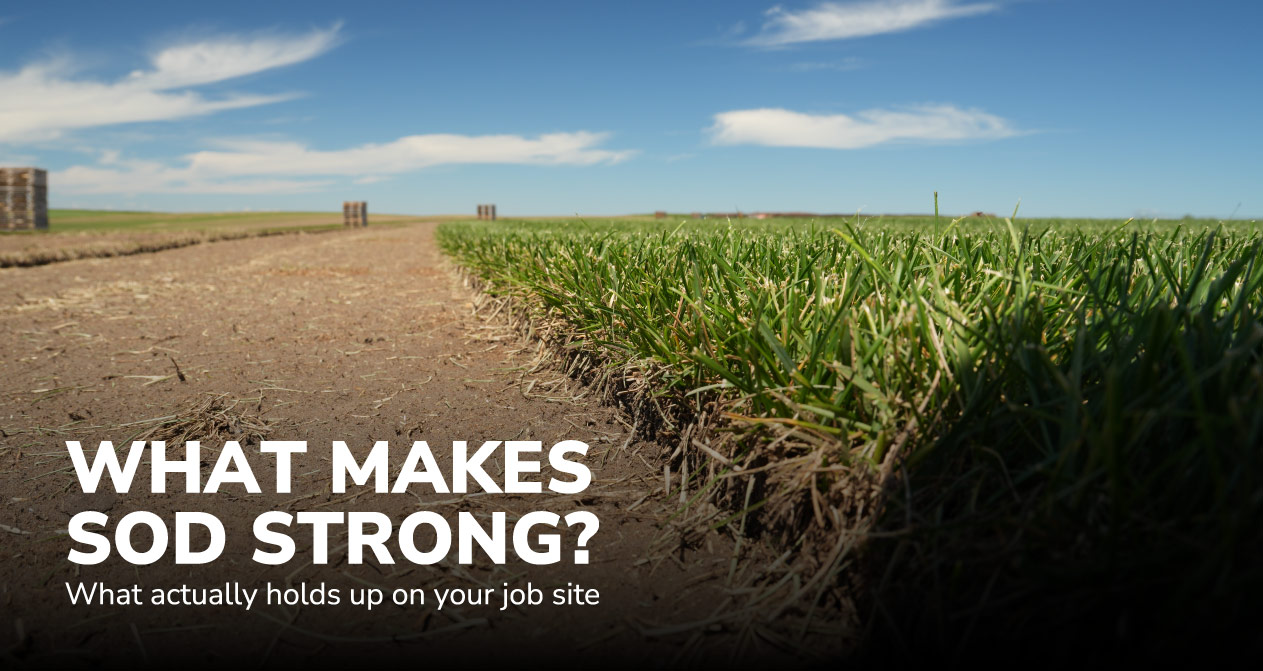
Not all sod is created equal.
When a roll holds together on the pallet, installs cleanly, and begins establishing properly, there is a reason. For contractors and turf professionals, sod strength shows up right away on the job site. It affects how the material handles during install and how well it establishes afterward.
Strong sod comes down to three things: root knit, maturity, and the soil it is grown in.
On a busy install day, strong sod matters. Rolls need to hold together, place cleanly, and give the turf a good start once it is watered in.
When sod is well grown and properly harvested, it:
● holds together during loading and placement
● installs more cleanly with fewer breaks
● adjusts easily during layout
● establishes more consistently after watering
Strong sod helps keep installs moving and gives the turf a better starting point once it is down.
Here’s a quick breakdown of what drives sod strength on a job site.
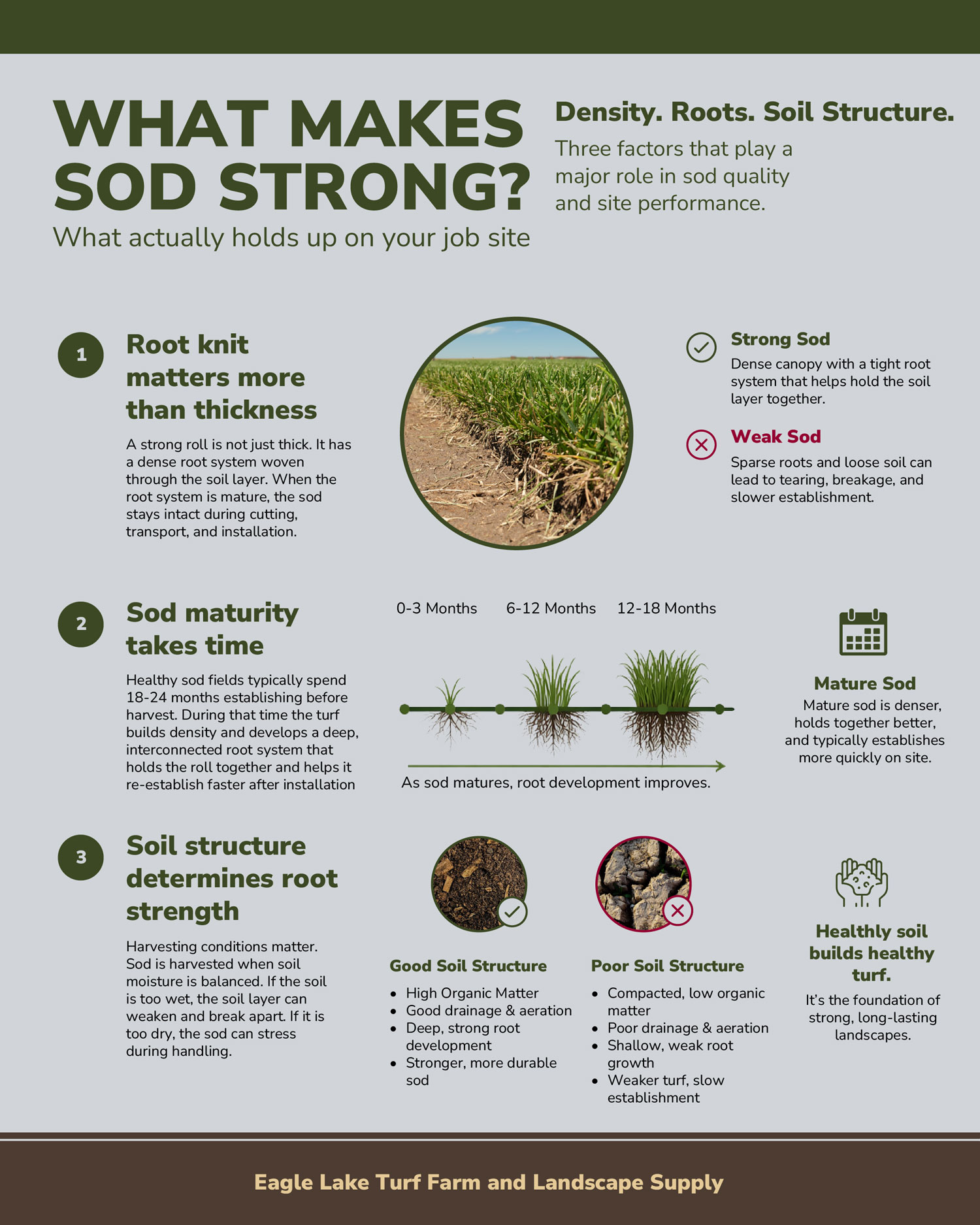
A strong roll is not just thick. It is tightly knit with roots that have grown through the soil layer and woven thes od together.
When the root system is mature, the rolls tays intact during cutting, loading, transport, and installation. That rootknit acts as the structure holding everything together.
If sod tears easily, it often means the root system has not fully developed through the soil profile yet. Even if the top growth looks good, the strength comes from what is happening below the surface.
You can see this in the root structure shown above. The strength comes from how the roots knit through the soil layer, not just how thick the sod looks from the top.
Sod strength is built over time.
Healthy sod fields typically spend 18–24months establishing before harvest. During that period, the turf develops density above ground and a deeper, more interconnected root system below.
This maturity allows the sod to:
● hold together more consistently
● handle transport and installation better
● re-establish more effectively after install
You can often see maturity in the canopy.Dense, uniform growth above ground usually reflects a well-developed root system below.
Quality sod starts with quality soil.
When soil structure has the right balance of organic matter and pore space, roots are able to grow deeper and knit together more effectively. That structure supports both strength at harvest and performance after installation.
Compacted or poorly structured soils limit root development. When roots cannot move freely through the soil, the sod is more likely to break during handling and may take longer to establish once installed.
Cutting conditions matter.
Sod is harvested when soil moisture is balanced. If the soil is too wet, the soil layer can weaken and break apart. If it is too dry, the sod can stress during handling.
Finding that window is part of producing consistent sod that performs well once it leaves the farm.
When sod shows up on site, there are a few quick indicators of quality:
● rolls hold together when lifted
● consistent density and colour across pallets
● soil layer stays intact during handling
● roots are visible through the soil layer
● sod is not overly dry orover heated
These are simple checks that can give you a good sense of how the sod will perform during installation.
Even well-grown sod depends on proper site conditions.
To give sod the best chance to establish:
● prepare a loose, well-graded soil base
● avoid compacted surfaces
● install as soon as possible after delivery
● water thoroughly right after installation
Strong sod provides a solid starting point, but site preparation and timing still play an important role in thefinal result.
In Southern Alberta, turf needs to handle dry periods, temperature swings, and real job site conditions.
Strong sod is not just about appearance.It is about how the turf performs through installation and into establishment.
Strong sod is not an accident.
It is the result of good soil, patient growing time, and harvesting at the right moment.
At Eagle Lake, we have been growing turf for Alberta conditions since 1998. The goal is simple:
Sod that performs when it hits the job site.
If you are planning an installation and want to talk through site conditions or turf options, our team is always happy to help.


